
For coaches, athletic directors and club directors

Close games get lost in the ten seconds after a mistake.

One error turns into three. The bench goes quiet, and your timeout turns into damage control. Those ten seconds can be trained like any other part of the game. Ashleigh trains them with your whole roster, inside your season, in the words your team already uses.

Not sure where your team loses games? Take the free Team Mental Game Check.

Sound familiar?

Three moments your team keeps losing

Every sport has its own version. Here is what each one looks like now, and what your athletes practice instead.

After a mistake

Your best player gives the ball away. Seconds later she has to go again with the error still replaying. Her shoulders drop and the next decision comes late.

What they practiceA reset they build in the session. Recognize the reaction, Release it with one physical action and a breath, then Refocus with a cue phrase for the next play. It fits between whistles.

Before the big game

Warm-ups feel different in the playoffs. The crowd is louder, legs feel heavy, and the routine that carried them all season suddenly feels thin.

What they practiceEach athlete writes a pre-game routine and runs it under pressure in the room, so the version they use in the playoffs has already been tested.

On the bench

The ref makes a bad call. Two players start chirping, the bench tightens up, and the next few minutes go to frustration.

What they practiceShared cue words the whole team agrees on. When your captain says "next play," everyone knows what it means and what to do with it.

Read before you decide

Short reads on each moment

Share them with your staff, your captains or your team parents.

Is this a fit?

Who this is for

Your team, on the same page.

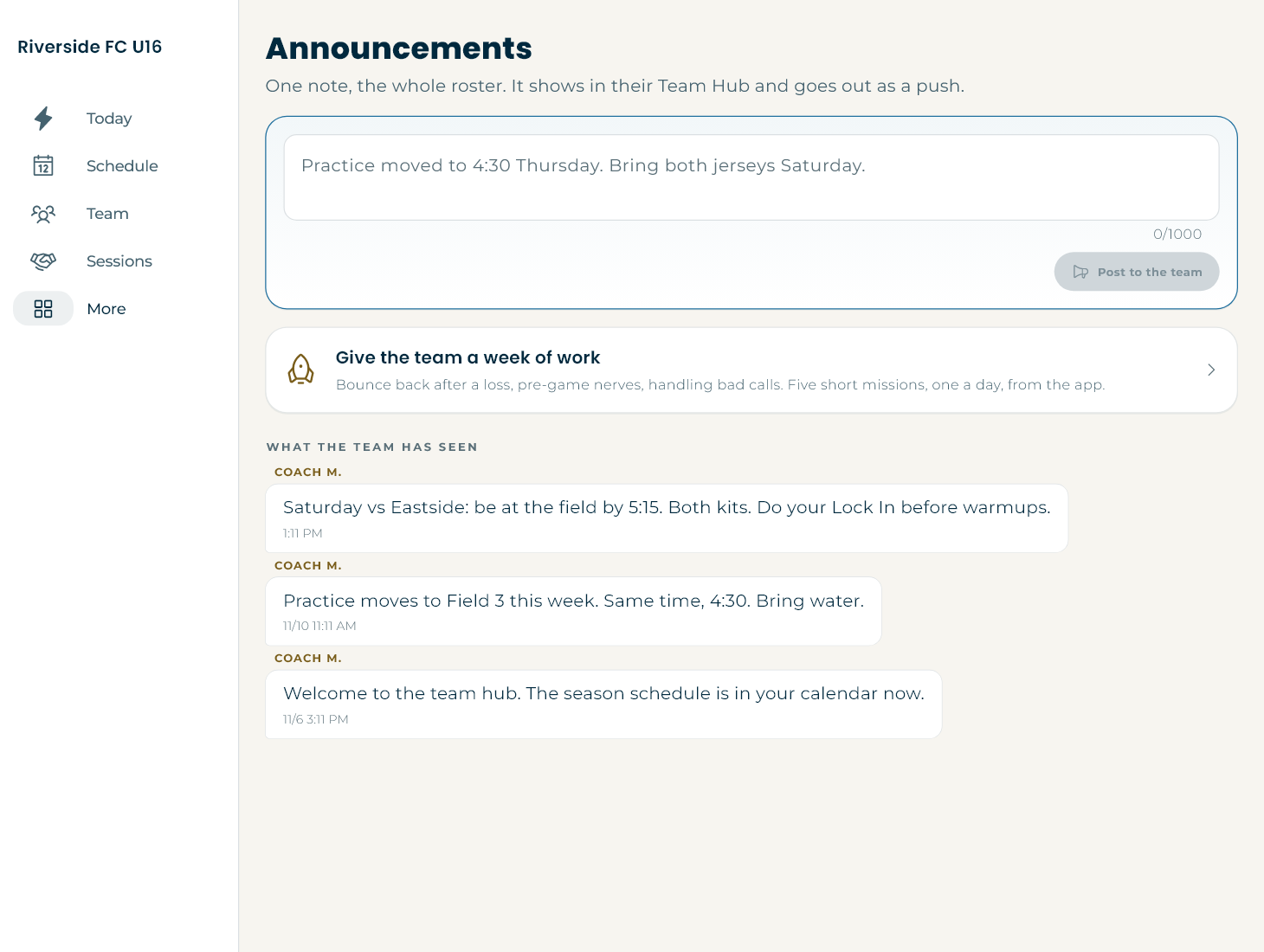
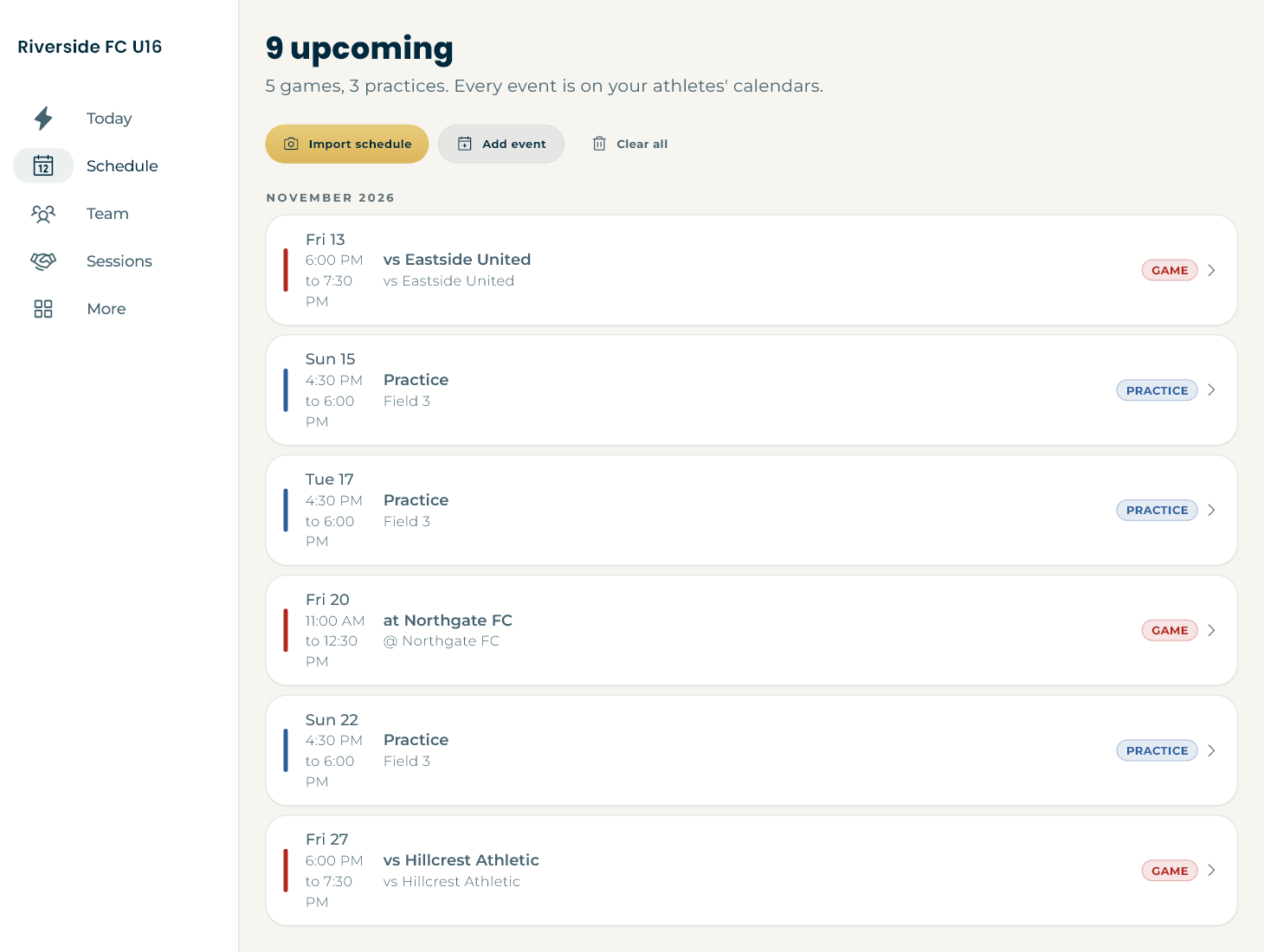
Your athletes get the same tools and the same language for mistakes, nerves and pressure. You post to the team, run the schedule and see who joined.

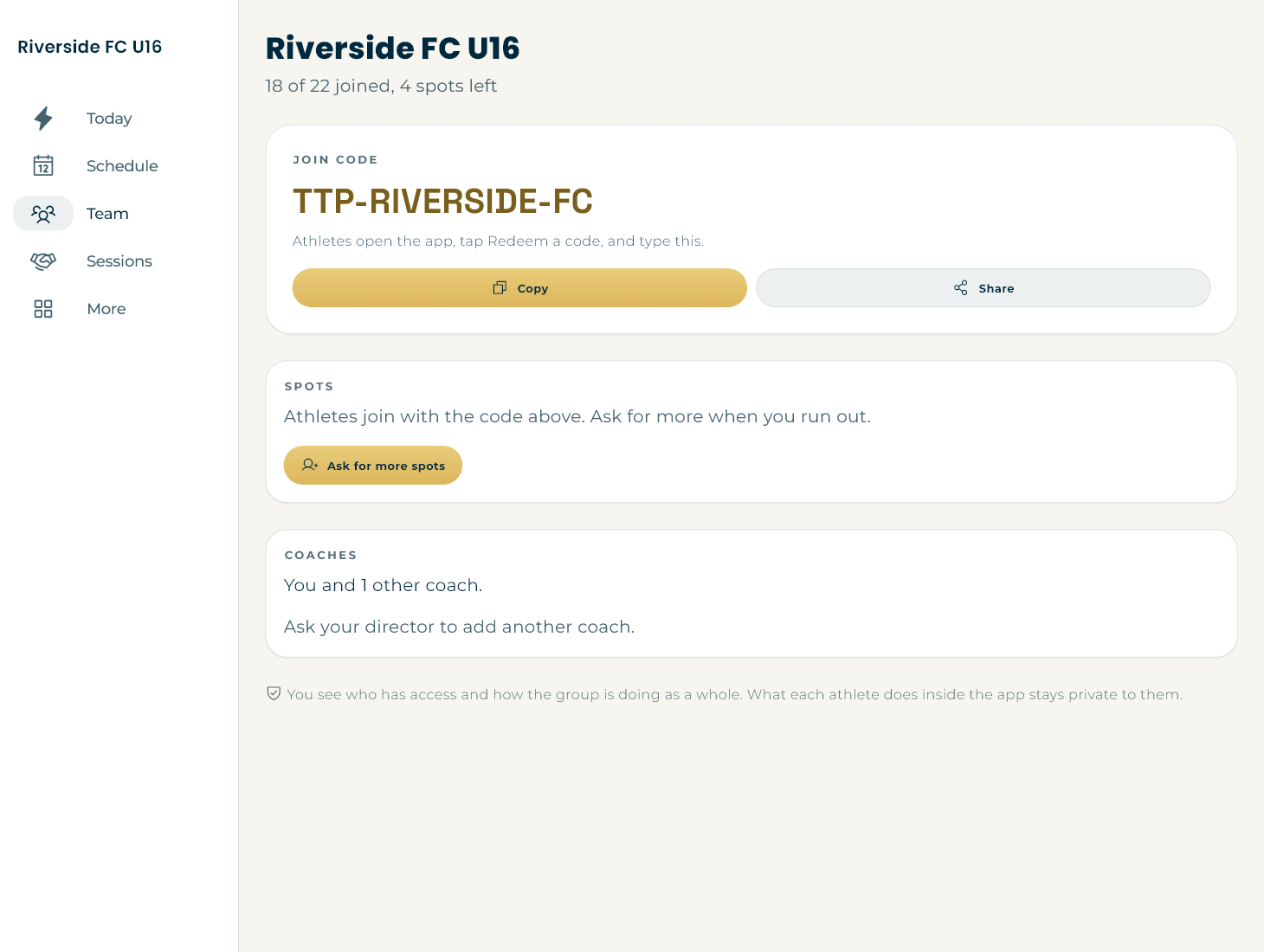
  • Join code your athletes enter in the app
  • Post to the team and add events
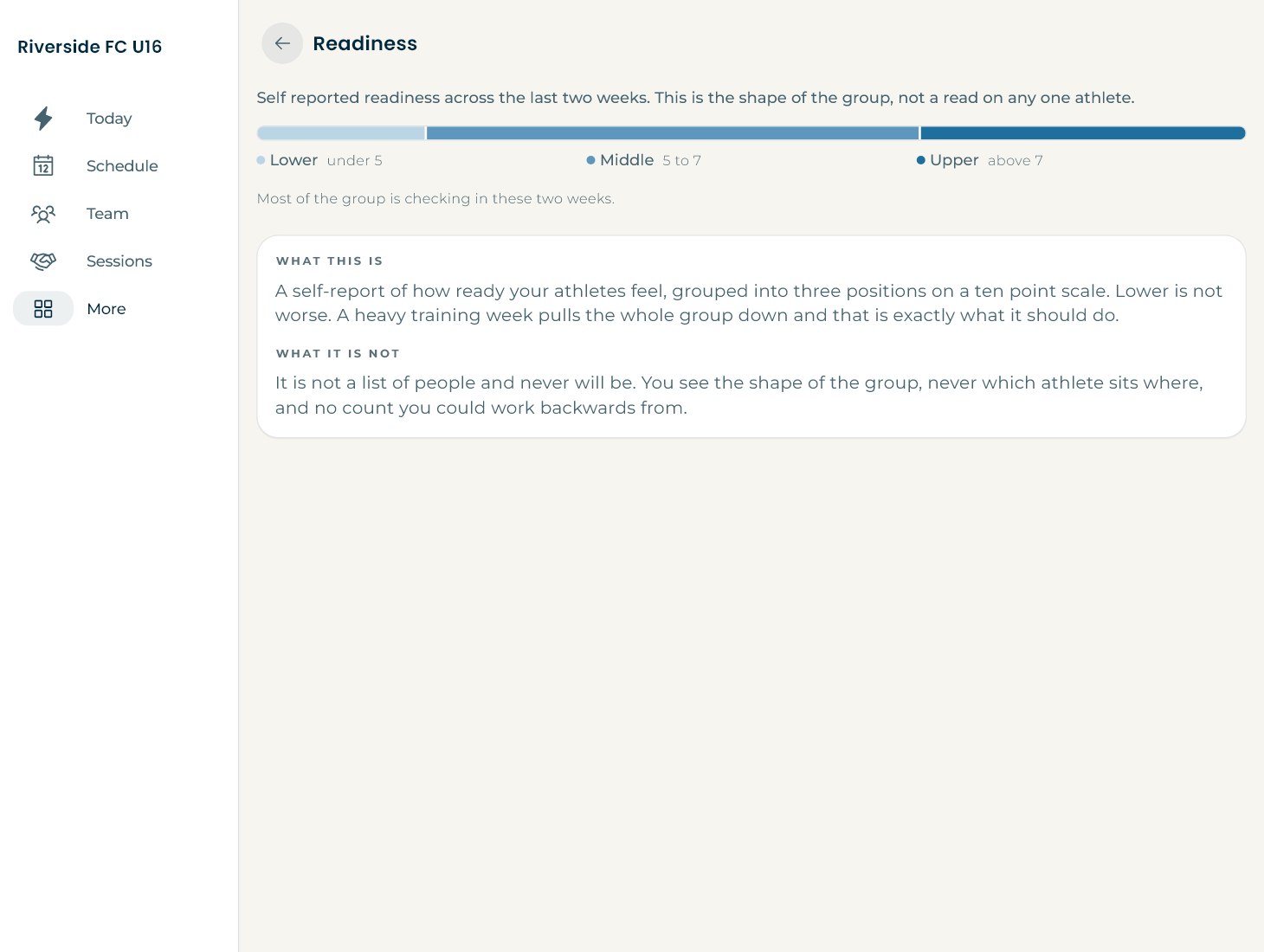
  • Anonymous team readiness each week

A good fit

  • High school, club and college teams with a season on the calendar
  • Coaches who want the mental side trained at practice, the same way skills are
  • Athletic directors who want one shared approach across several teams
  • Staff willing to use the team's cue words between sessions

Not the right fit

  • You want one motivational talk for a banquet or camp. That is the keynote.
  • One athlete needs individual work. That is 1:1 sessions.
  • An athlete is dealing with a mental health concern. That calls for a licensed clinician. The SAMHSA National Helpline (1-800-662-4357) is free, confidential and open 24/7 for finding care. In a crisis, call or text 988.
What you see

See the team. Not the diary.

Coaches and directors see team-level numbers and the schedule. Athletes keep journals and check-ins private, so they answer honestly.

Head coach

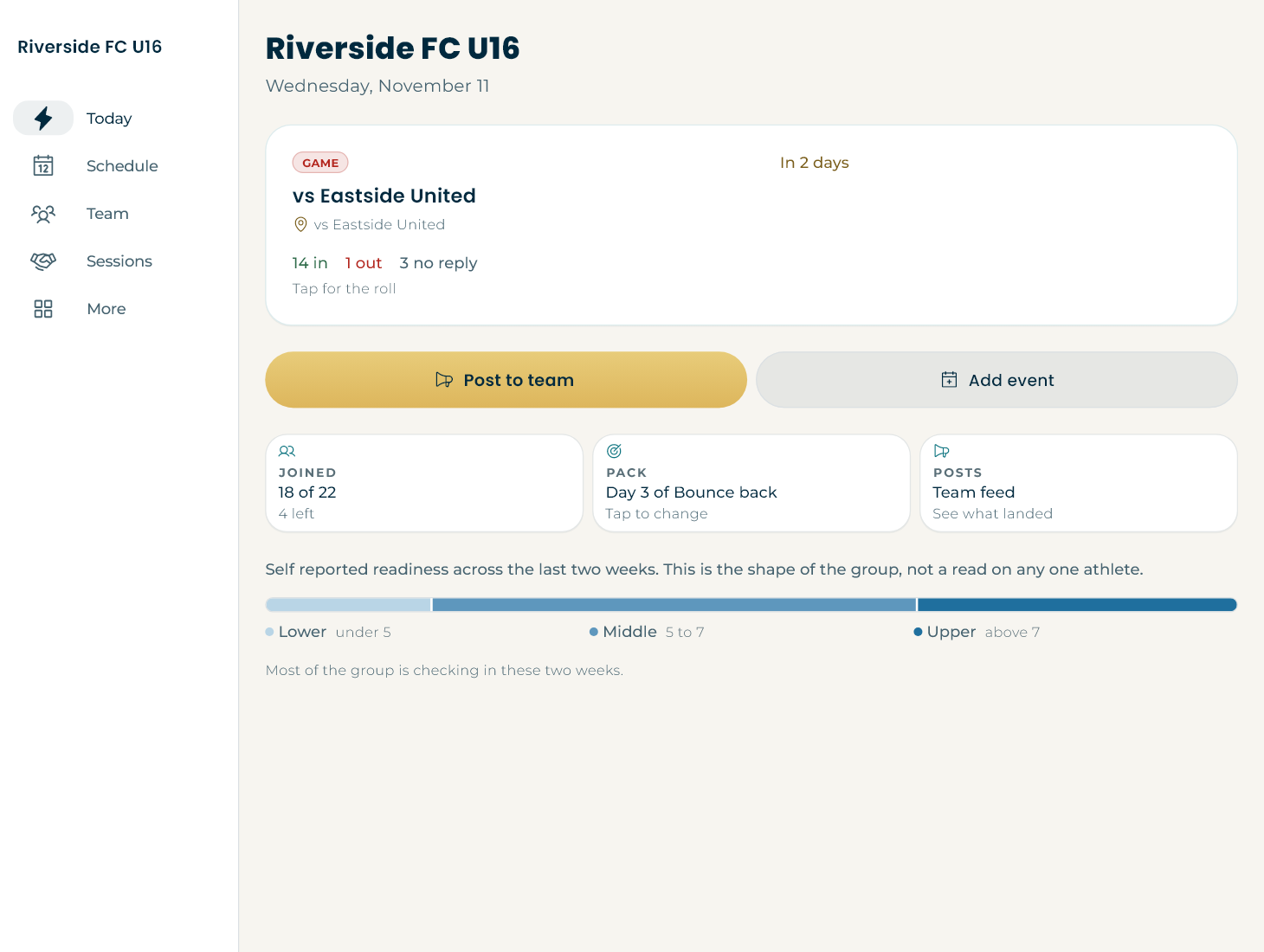
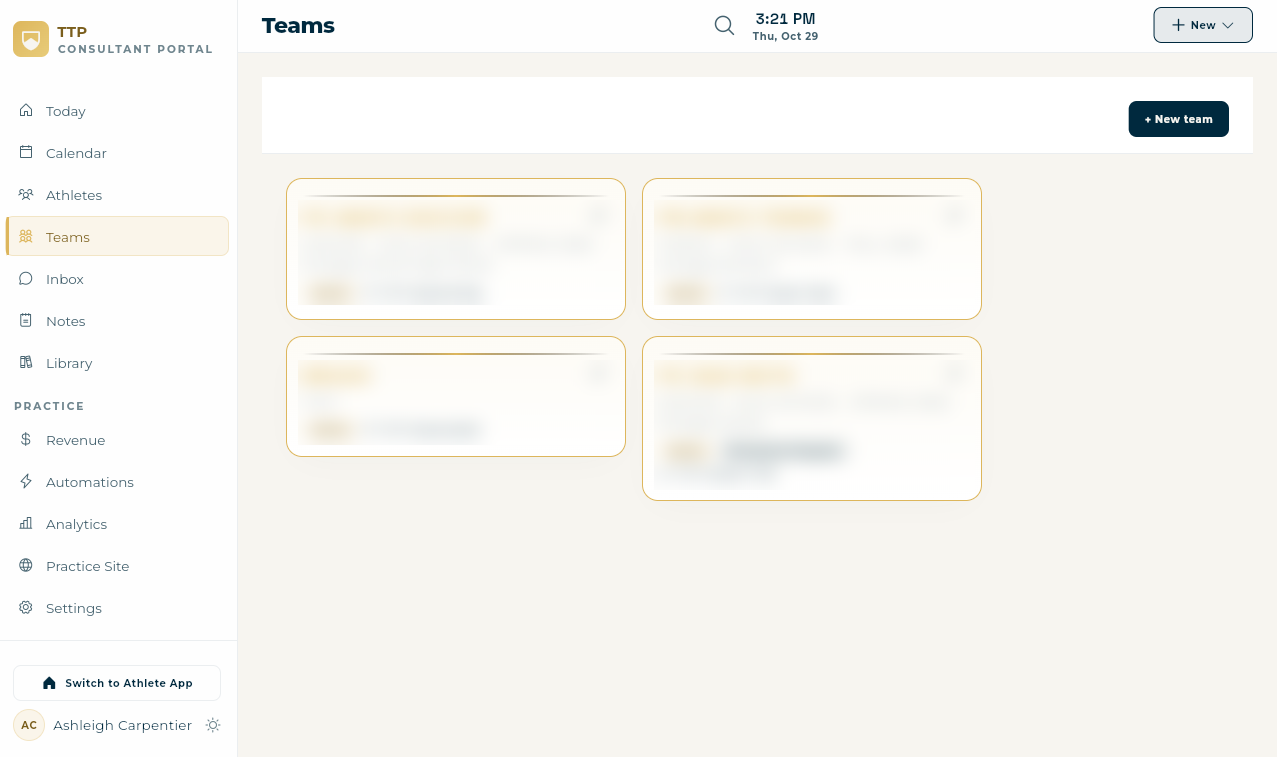
Your whole team on one screen.

  • How many athletes joined and what is on the schedule
  • An anonymous picture of team readiness
  • Athletes keep journals and check-ins private, so they answer honestly
Build a quote
app.toptier-perform.com
Coach viewSample screen
The coach view

Sample screens for illustration. Sample data for illustration.

The program

Eight sessions across your season

One program, built around your sport, your schedule and the moments your team keeps losing. You get a written plan and the exact price before anything is booked.

For teams and small groups

Season Program

$120 per athlete

8 sessions, 30 minutes each, spread across your season

Short sessions that fit inside practice. Your athletes learn a skill, use it in real games, and bring back what happened while the games still count.

  • A short planning call with your staff before session one
  • Skills in order: routines first, then pressure, then leadership
  • Sessions planned around your competition calendar
  • A one-page coach sheet to keep the language going at practice

Training a few athletes instead of a whole team? The same eight sessions run as a small group.

Speaking

Keynote or event talk

Banquets, camps, conferences and award nights. 30 to 60 minutes with one tool the room can use that night. Tell Ashleigh about the event and she'll send a quote.

Build a team quote

How many athletes are on the roster?

Season program, $120 per athlete for eight 30-minute sessions. You get the exact price in writing before anything is booked.

Season estimate $2,400 Send this to Ashleigh
How it works

From first call to game day

01

Tell Ashleigh about your team

Send the short inquiry form or take the Team Check first. Ashleigh replies personally within 2 to 3 business days.

02

A short planning call

You talk through your season, your roster and the moments that keep costing you. Then you get a written plan and a price.

03

Sessions in your practice time

Athletes build their routines and run them under pressure in the room. Your staff gets the same cue words.

04

The language stays at practice

A coach sheet keeps the cue words in use between sessions, so the skills get used on game day and not only in the room.

Ashleigh Carpentier, MPC

Ashleigh Carpentier, MPC, M.S. Sport & Exercise Psychology

Mental Performance Consultant and founder of Top Tier Performance. A former D1 soccer player and team captain, she teaches mental skills the way coaches teach physical ones: explained in athlete language, practiced in the room, then tested under pressure.

Time and effort

What it asks of your team

Your athletes

The session time, plus a few minutes before practice or games to run their routine. Nobody gets a homework packet.

Your staff

One planning call, and using the team's cue words at practice. The coach sheet tells you when and how.

Questions coaches ask

FAQ

The season program is $120 per athlete for eight 30-minute sessions. You see the exact price in writing before anything is booked.

Each session is 30 minutes and fits inside a practice. Between sessions, athletes run a routine that takes seconds to a few minutes. Sessions are planned around your schedule, not the other way around.

No. This is mental skills training for performance: routines, focus, pressure and how a team talks to itself. It does not diagnose or treat anything. If an athlete shows signs of a clinical concern, Ashleigh refers them to a licensed mental health professional.

Parents hear what the team is working on, so the message at home matches practice. You can add a parent night to any season.

The skills are the same across sports. The examples, cue words and pressure reps are built around yours, using your staff's language.

Take the free Team Mental Game Check. It takes a few minutes and shows where your team is losing games and what to train first. You can also send the inquiry form and pick "just exploring."

Build it into your season

Tell Ashleigh about your team and the moment that keeps costing you. She replies within 2 to 3 business days.

Ask About Your Season